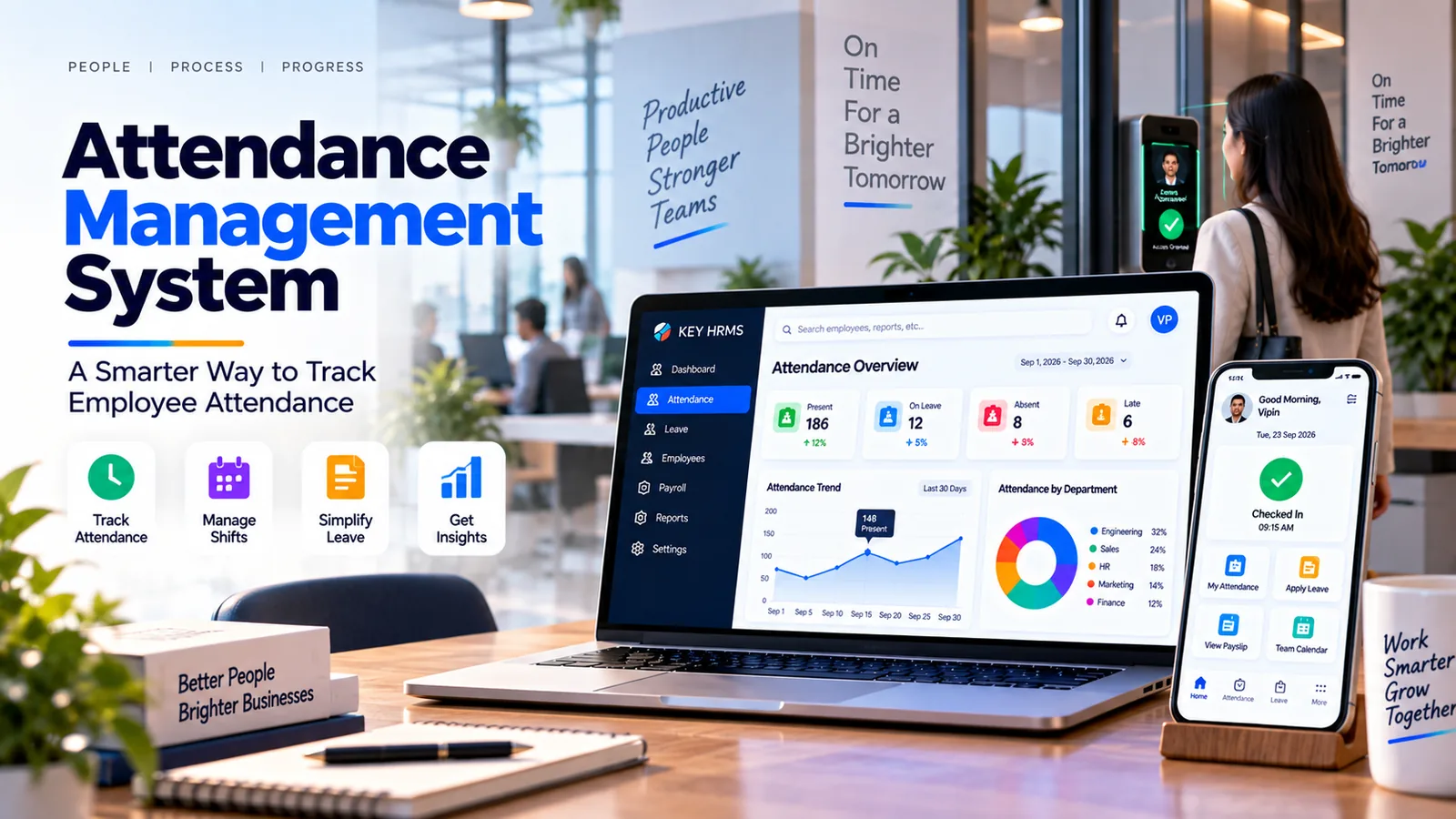
Attendance Management System: Features, Benefits, and Why Businesses Need One
Attendance Management System: A Smarter Way to Track Employee Attendance
Managing employee attendance manually can become increasingly difficult as organizations grow. HR teams may need to handle attendance records, late arrivals, working hours, shifts, overtime, leave, and payroll inputs across multiple employees and locations.
An attendance management system provides a centralized way to record, monitor, and manage employee attendance. By replacing spreadsheets and manual processes with automation, businesses can improve accuracy, reduce administrative work, and gain better visibility into workforce attendance.
What Is an Attendance Management System?
An attendance management system is software designed to automate the process of recording and managing employee attendance.
Instead of relying entirely on registers or spreadsheets, organizations can use digital attendance tracking to maintain accurate records of employee working hours, attendance status, shifts, leave, and overtime.
Modern attendance management software can also connect attendance data with other HR processes, particularly leave management and payroll.
Why Is Attendance Management Important?
Accurate attendance data is important for both HR teams and employees. Poor attendance tracking can result in incorrect working-hour records, payroll discrepancies, delayed approvals, and unnecessary administrative work.
An effective system helps organizations:
- Maintain accurate attendance records
- Track employee working hours
- Manage shifts and schedules
- Monitor overtime
- Simplify leave and attendance processes
- Reduce manual data entry
- Generate attendance reports
- Improve payroll accuracy
For growing organizations, automated attendance management can provide better workforce visibility without increasing HR workload.
Key Features of an Attendance Management System
1. Automated Attendance Tracking
Employees can record attendance digitally, while HR teams can monitor attendance information from a centralized platform. This reduces dependency on manual registers and spreadsheets.
2. Shift Management
Organizations with different working schedules need flexible shift management. An attendance system can help HR teams configure and monitor employee shifts, making attendance tracking easier across different schedules.
3. Working Hours and Overtime Tracking
Tracking working hours manually can be time-consuming. An automated system helps HR teams monitor working hours and overtime more efficiently.
4. Leave and Attendance Integration
Attendance and leave are closely connected. Integrating both processes helps organizations maintain consistent records and simplifies leave approvals and attendance calculations.
5. Real-Time Attendance Reports
Attendance reports help HR teams understand absenteeism, working patterns, late arrivals, overtime, and other workforce trends. These insights can support better workforce decisions.
6. Employee Self-Service
Employee self-service features allow employees to access attendance information and manage routine HR activities without depending on HR for every request. KEY HRMS also provides mobile access for attendance, leave, payslips, and employee information.
Benefits of Using Attendance Management Software
Improved Accuracy
Automated attendance records reduce errors associated with manual data entry and calculations.
Reduced HR Workload
Routine attendance-related tasks can be streamlined, allowing HR professionals to spend more time on strategic activities.
Better Payroll Processing
Accurate attendance and leave information can support salary calculations. KEY HRMS integrates attendance and leave information with payroll to help calculate working days, overtime, leave deductions, and related salary components.
Greater Employee Transparency
Employees can access their attendance information and stay informed about their working records.
Better Workforce Insights
Attendance reports can help organizations identify absenteeism patterns, overtime trends, and workforce requirements.
How KEY HRMS Simplifies Attendance Management
KEY HRMS brings attendance and leave management together within a centralized HR platform. Businesses can manage attendance, shifts, overtime, leave, employee information, workflows, and HR reports from one system.
With mobile and web-based access, employees can also manage attendance and other HR activities more conveniently.
For organizations looking to replace manual attendance processes, KEY HRMS offers a practical way to modernize employee attendance management while connecting attendance with broader HR and payroll operations.
Ready to simplify attendance management? Explore KEY HRMS and discover a smarter way to manage your workforce.
Conclusion
An attendance management system is no longer simply a replacement for an attendance register. It can become an important part of modern workforce management.
By automating attendance tracking, shifts, working hours, overtime, leave, reporting, and payroll-related processes, businesses can reduce manual effort and improve operational accuracy.
For growing organizations, adopting the right attendance management software can create a more efficient HR environment while providing employees and managers with greater visibility into attendance information.
FAQs
What is an attendance management system?
An attendance management system is software that helps businesses digitally record, track, and manage employee attendance, working hours, shifts, overtime, and related HR activities.
What are the benefits of an attendance management system?
It improves attendance accuracy, reduces manual HR work, simplifies reporting, supports shift management, improves transparency, and can connect attendance data with payroll and leave management.
Can an attendance management system manage employee shifts?
Yes. Modern attendance management systems can support different employee shifts and schedules, making them suitable for organizations with multiple working patterns.
Can attendance software integrate with payroll?
Yes. Attendance data can be connected with payroll to help calculate working days, overtime, leave deductions, and other attendance-related salary components.
Is an attendance management system useful for small businesses?
Yes. Small businesses can use attendance software to reduce spreadsheets and manual processes while establishing organized attendance records as their workforce grows.