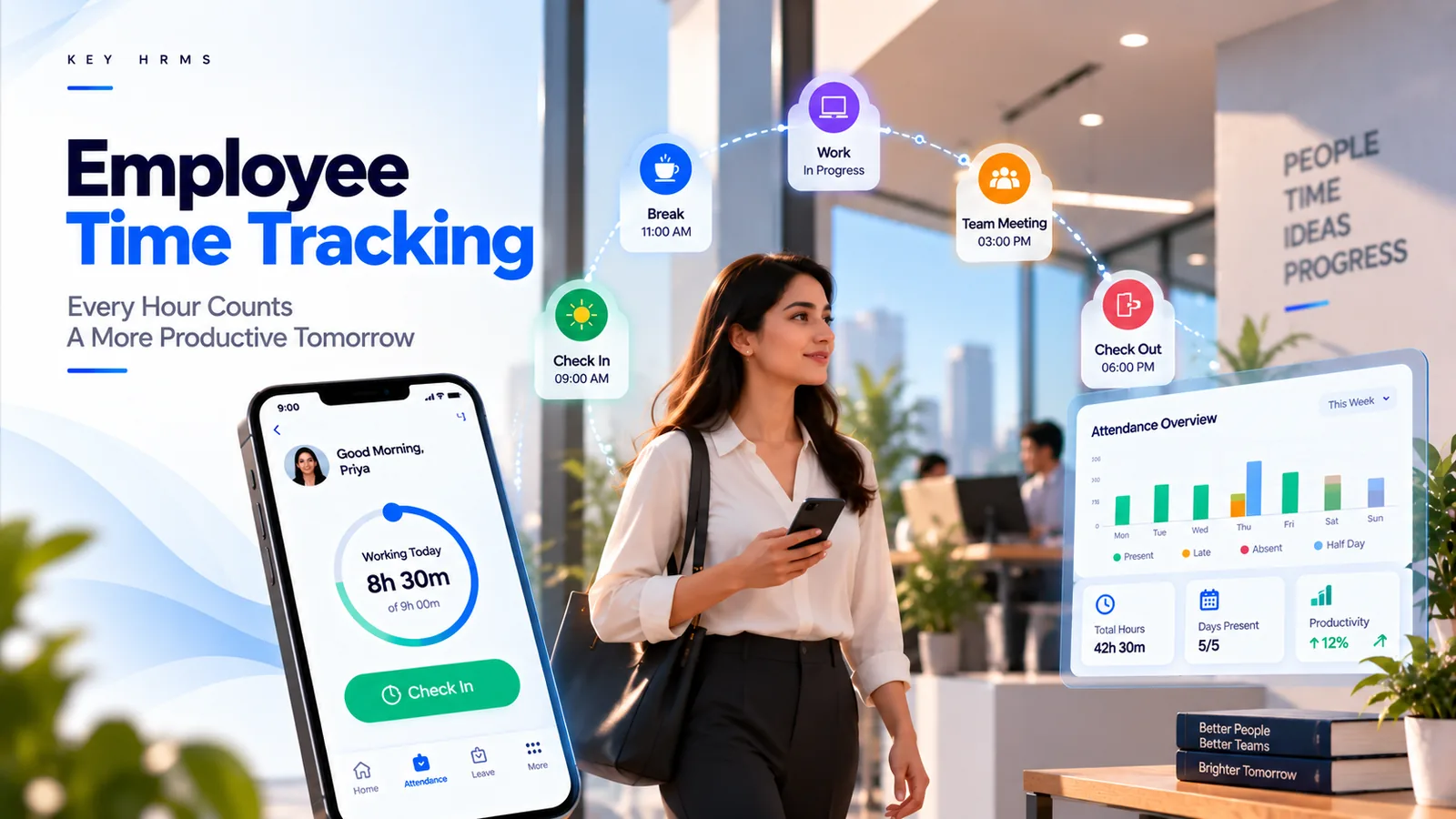
Employee Time Tracking: A Smarter Approach to Attendance Management
Managing employee attendance becomes increasingly challenging as organizations grow. Manual attendance registers, spreadsheets, punch records, and disconnected systems can make it difficult for HR teams to maintain accurate attendance data.
Employee time tracking provides a more efficient approach by helping organizations record working hours, monitor attendance, manage shifts, and maintain reliable workforce data.
As an important part of modern attendance management, time tracking can help HR teams reduce manual work while giving employees and managers better visibility into working hours.
What Is Employee Time Tracking?
Employee time tracking is the process of recording and monitoring employees' working hours, attendance, check-in and check-out times, breaks, overtime, and related work schedules.
Organizations can use automated attendance systems to capture employee time data and make it easier to manage workforce information.
Instead of relying entirely on manual records, HR teams can use a centralized system to access attendance information and identify discrepancies more efficiently.
Why Is Employee Time Tracking Important for Attendance Management?
Accurate time data is essential for effective attendance management. A reliable employee time tracking system can help businesses:
- Record employee check-in and check-out information
- Monitor working hours
- Track late arrivals and early departures
- Manage shifts and schedules
- Identify attendance irregularities
- Calculate overtime more efficiently
- Support accurate payroll processing
- Reduce manual HR administration
For organizations with multiple teams, locations, or shifts, automated time tracking can make attendance management significantly easier.
Key Benefits of Employee Time Tracking
1. Improved Attendance Accuracy
Manual attendance records can result in duplicate entries, missing information, or calculation errors. Automated employee time tracking helps create consistent attendance records and reduces dependency on spreadsheets.
2. Better Workforce Visibility
Managers can get a clearer picture of employee attendance and working patterns. This can help them identify recurring attendance issues and make better workforce decisions.
3. Simplified Shift Management
Organizations with different shifts need accurate attendance information. An attendance management system can help align employee attendance with assigned schedules and make shift-related tracking easier.
4. Reduced HR Workload
HR teams often spend significant time collecting attendance data, correcting records, and preparing information for payroll. Automation can reduce repetitive administrative tasks and allow HR professionals to focus on more strategic activities.
5. Better Payroll Accuracy
Attendance and working-hour data often influence payroll calculations. Accurate employee time tracking helps provide reliable attendance information for payroll processing and reduces errors caused by manual data entry.
Employee Time Tracking and Employee Productivity
Time tracking is not simply about recording when employees arrive and leave. When used appropriately, attendance data can provide useful workforce insights.
HR teams can analyze patterns such as frequent late arrivals, absenteeism, overtime, and shift attendance. These insights can help organizations identify operational challenges and improve workforce planning.
However, businesses should use time tracking transparently and focus on attendance and workforce management rather than unnecessary employee surveillance.
How KEY HRMS Supports Attendance Management
KEY HRMS brings attendance and workforce information together in a centralized HRMS environment. Its attendance capabilities can help organizations manage employee attendance, working hours, shifts, and related HR processes more efficiently.
By connecting attendance information with other HR functions, KEY HRMS can help reduce manual processes and provide HR teams with better visibility into workforce data.
This makes employee time tracking an important component of a broader attendance management strategy.
Best Practices for Employee Time Tracking
To get better results from an employee time tracking system:
- Define clear attendance and working-hour policies.
- Configure shifts and schedules according to business requirements.
- Ensure employees understand how attendance is recorded.
- Review attendance exceptions regularly.
- Connect attendance data with relevant HR and payroll processes.
- Use attendance reports to identify workforce trends.
- Protect employee data and maintain appropriate access controls.
Conclusion
Effective employee time tracking is an important part of modern attendance management. By automating attendance records, monitoring working hours, simplifying shift management, and supporting payroll processes, organizations can reduce administrative effort and improve workforce visibility.
With an integrated HRMS solution such as KEY HRMS, businesses can move beyond manual attendance processes and build a more organized, efficient, and data-driven approach to workforce management.
FAQs
What is employee time tracking?
Employee time tracking is the process of recording employee working hours, attendance, check-in and check-out times, breaks, overtime, and schedules.
How does employee time tracking improve attendance management?
It helps organizations maintain accurate attendance records, monitor working hours, identify attendance irregularities, and reduce manual data entry.
Can employee time tracking support shift management?
Yes. Time tracking systems can help organizations monitor attendance against assigned shifts and manage employees working different schedules.
Does employee time tracking help with payroll?
Yes. Accurate attendance and working-hour information can provide reliable data for payroll calculations, including applicable overtime and attendance-related inputs.
How can KEY HRMS help with attendance management?
KEY HRMS provides centralized HRMS capabilities that can help businesses manage employee attendance, working hours, shifts, and related workforce processes more efficiently.